Downloadable Art
Images — Right-Click, Save, Done
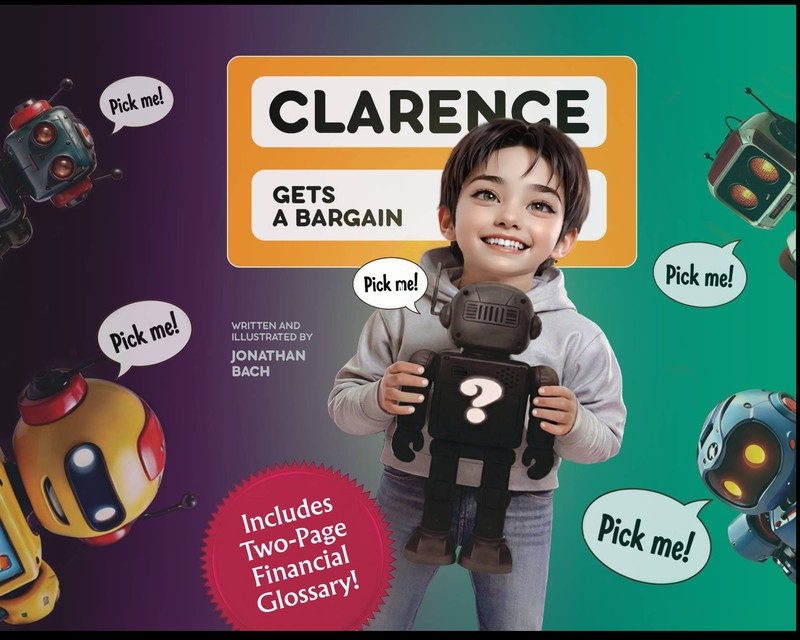
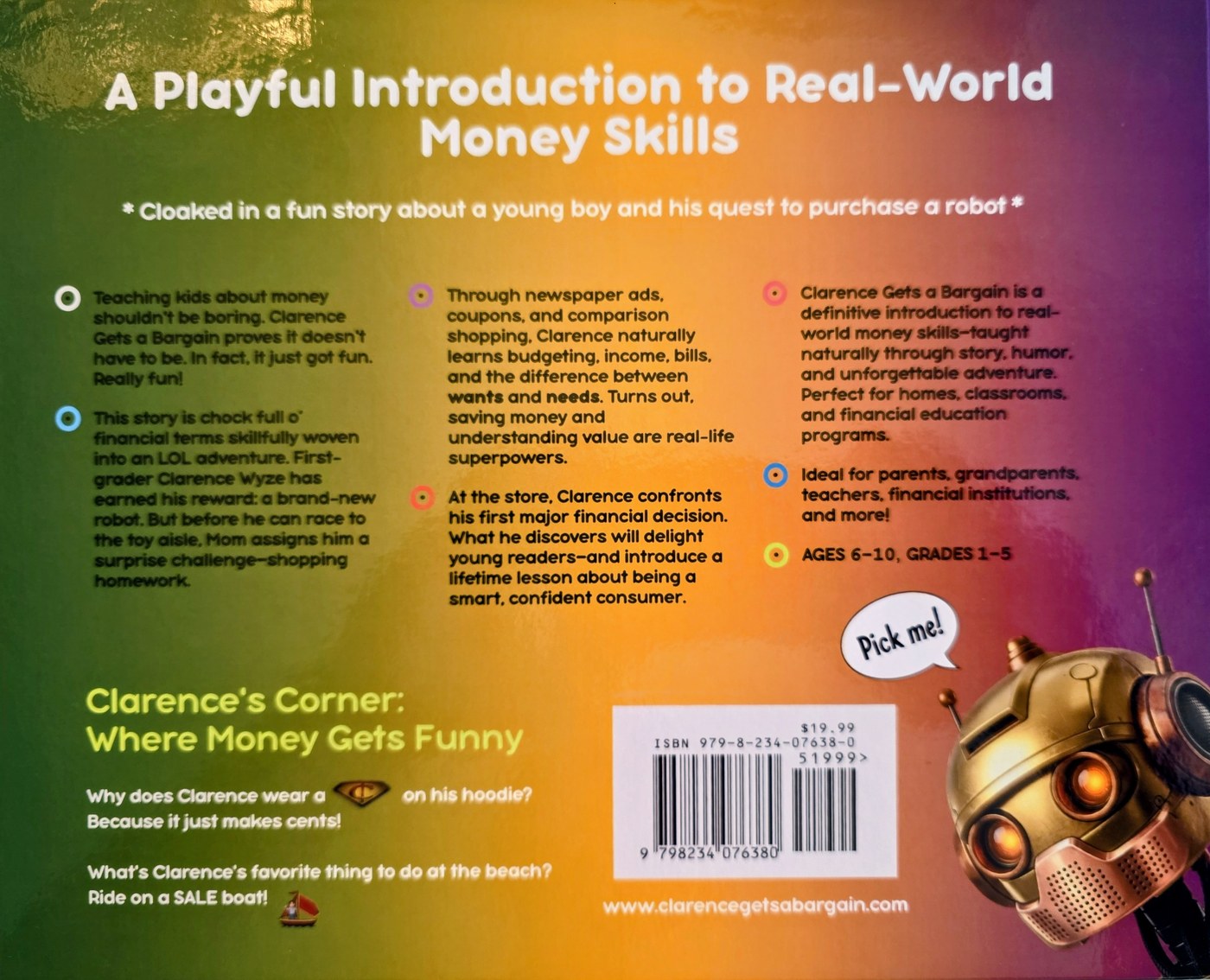

Higher-resolution files for print: questions@clarencegetsabargain.com. Please credit “Jonathan Bach / Clarence Gets a Bargain.”
Author Bio
Jonathan Bach, in Three Sizes
One-liner (podcast intro)
Jonathan Bach is an attorney, mixed-media artist, and dad who wrote and illustrated Clarence Gets a Bargain — a picture book that sneaks real financial literacy into a story about a kid and a robot.
Short (~60 words)
Jonathan Bach is an attorney, mixed-media artist, and children’s book author — simultaneously right-brained and left-brained, which means he can draft a contract and illustrate a picture book in the same afternoon. His debut, Clarence Gets a Bargain, teaches kids ages 6–10 how to actually spend money wisely: sale ads, markdowns, coupons, and the sales tax at the register. Story first. Money smarts sneak in.
Long (~130 words)
Jonathan Bach is a real estate finance and title attorney with 25+ years of experience, a mixed-media artist, and a dad with a documented reputation as a deal master — he once convinced a cruise-ship retailer to price-match a competitor and paid one cent for a $300 pair of shoes. That is not a typo. He wrote and illustrated Clarence Gets a Bargain because money habits form by age seven, and most kids’ money books are either too dry for a first grader or too thin for a fifth grader. His answer: a 36-page story in which a boy earns a robot reward and completes one real purchase, from “shopping homework” with the sale ads to handing a coupon to the cashier. The book covers 16+ financial concepts, aligns to five national standards frameworks, and ends with a 21-term glossary. Kids read it for the robot. The rest sneaks in.
Fact Sheet
The Numbers Desk
| Title | Clarence Gets a Bargain |
| Author / Illustrator | Jonathan Bach (also the publisher — independent) |
| ISBN-13 | 979-8-234-07638-0 |
| LCCN | 2026906164 |
| Format | Hardbound, case bound, full color, 11 × 8.5″, 36 pages |
| Audience | Ages 6–10, grades 1–5 (Est. Lexile AD 620L) |
| Price | $19.99, direct at clarencegetsabargain.com |
| Concepts | 16+, including budgeting, comparison shopping, coupons & markdowns, sales tax, 529 college savings, and Wants vs. Needs |
| Standards | Jump$tart, Common Core Math, Common Core ELA, CEE, FDIC Money Smart |
| Back matter | 21-term financial glossary, page-referenced to the story |
| Endorsements | Maryann Milewski Moskal, veteran elementary educator (30+ years, K–5); Wally Luckeydoo, Ed.D. (2026 EIFLE Educator of the Year; 2026 Jump$tart Corey Carlisle Award) |
Positioning
Lines You Can Quote
- “A money book kids actually read.”
- “Story first. Money smarts sneak in.”
- “Any book can teach a kid to save. The hard part is teaching them to spend.”
- “Every other money book stops at the piggy bank.”
- “Kid lit is a hit! Kid fin is a win!”
Interview
Five Questions That Get Good Answers
- Ask him about the one-cent shoes. (A $300 pair, a cruise ship, a price-match, and the origin story of the “deal master” reputation.)
- Why a book about spending, when every other kids’ money book is about saving? (His fork-in-the-road argument: before a kid ever saves a dollar or invests one, they spend one.)
- What’s “shopping homework,” and why do kids weirdly love it? (Sale ads, coupon inserts, and a mission — from page 4 of the book.)
- You’re an attorney and an artist. Which half wrote this book? (Both. One drew the robots; the other made sure the sales tax was accurate.)
- What happens in Aisle Five? (He won’t spoil it. Neither should you — but it’s the moment the whole book turns, and there’s a very large orange sign involved.)
Media inquiries, review copies, interviews:
questions@clarencegetsabargain.com
questions@clarencegetsabargain.com